
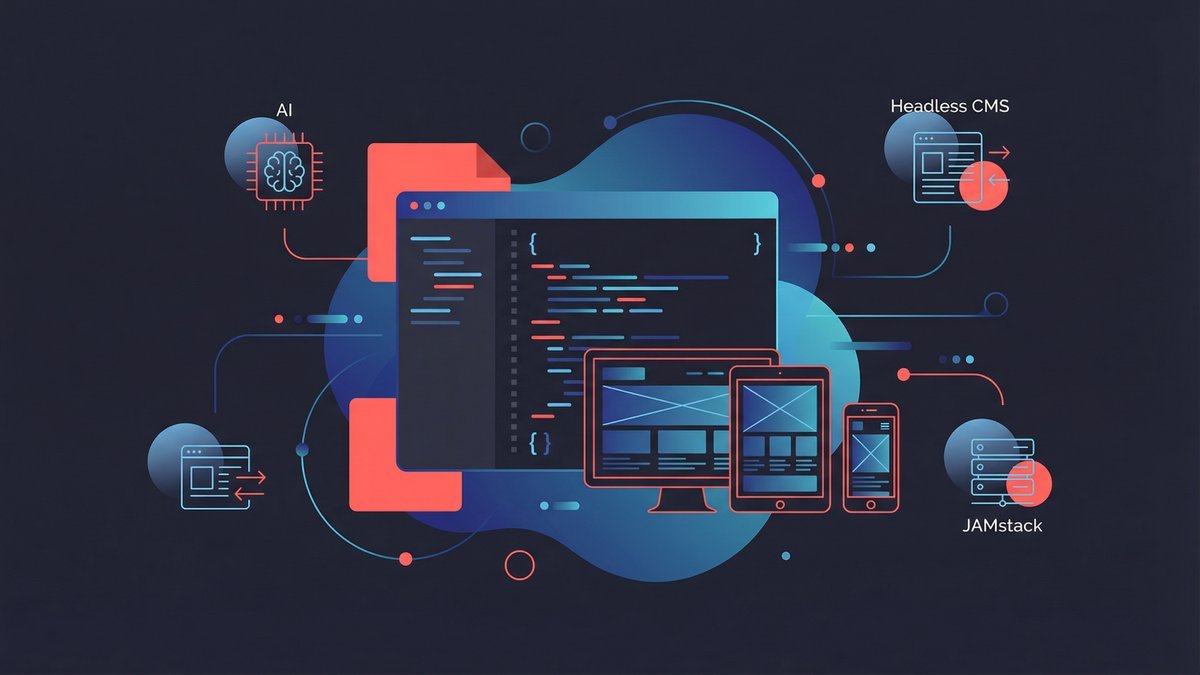
Building a website in 2026 requires understanding the rapidly evolving landscape of web technologies and design trends. From traditional platforms like WordPress to modern frameworks such as Next.js, developers have numerous options to create performant and engaging websites.
In addition, innovations like headless CMS architectures and artificial intelligence are shaping how websites perform and interact with users. This article provides a detailed panorama of these key technologies and trends to help you build a website in 2026 that stands out and delivers great user experiences.
Why Build Website 2026 with WordPress Still Makes Sense
WordPress remains one of the most popular content management systems worldwide, powering over 40% of the web. In 2026, its flexibility and extensive plugin ecosystem continue to make it a solid choice for many website projects, especially for businesses seeking ease of use and rapid deployment.
Recent updates have enhanced WordPress’s performance and compatibility with modern web standards. The integration of the Gutenberg block editor enables more dynamic content layouts without coding. Furthermore, WordPress supports headless configurations, allowing developers to use the CMS as a backend with a separate frontend framework.
For companies targeting markets in Tunisia, France, and Canada, WordPress offers multilingual support and strong community resources. Web Generation’s website creation services often leverage WordPress for clients needing scalable and manageable sites with reliable hosting options.
Next.js and the Rise of React Frameworks to Build Website 2026
Next.js, built on React, has become a leading framework for building fast, scalable websites and web applications. Its server-side rendering capabilities and static site generation contribute to improved SEO and performance, essential factors when you build a website in 2026.
Developers value Next.js for its developer experience and flexibility, enabling incremental static regeneration and API routes that simplify backend integration. These features allow websites to load quickly and stay dynamic where needed, meeting modern user expectations.
In markets like Switzerland and Belgium, where user experience and speed are vital for competitive advantage, Next.js is gaining traction. Web Generation’s free SEO Analyzer helps identify optimization opportunities for Next.js projects to maximize search visibility.
Headless CMS: A Game-Changer to Build Website 2026
The headless CMS model is transforming how content is managed and delivered. By decoupling the content repository from the presentation layer, it provides unmatched flexibility in how websites are built and updated.
This approach lets developers choose any frontend technology—like Next.js or Vue.js—while content editors use familiar interfaces. Headless CMS solutions such as Strapi, Contentful, or Sanity offer APIs that streamline content distribution across multiple channels, including mobile apps and IoT devices.
For businesses in France and Canada, headless CMS architectures enable rapid content updates and omnichannel marketing strategies. Web Generation’s expertise in SEO services complements headless CMS setups by ensuring content is optimized for search engines despite the architectural complexity.
Incorporating AI to Build Website 2026: Smarter and More Personalized
Artificial Intelligence is no longer a futuristic concept but a practical tool for website development in 2026. AI-powered chatbots, content generation, personalization engines, and accessibility improvements are becoming standard features that enhance user engagement.
AI can analyze user behavior to dynamically adapt content, recommend products, or streamline navigation paths. Tools leveraging natural language processing also help automate customer support, freeing up human resources.
In regions like Tunisia and Belgium, adopting AI-driven features can differentiate a website in competitive sectors such as e-commerce or services. Web Generation’s training courses include modules on integrating AI to help clients and developers stay ahead.
Performance Optimization Trends to Build Website 2026 That Excels
Performance remains a cornerstone when you build a website in 2026. Faster load times, smooth interactions, and reduced resource consumption directly impact user satisfaction and SEO rankings.
Techniques such as image optimization, lazy loading, code splitting, and leveraging Content Delivery Networks (CDNs) are essential. Modern frameworks like Next.js support many of these out-of-the-box, but continuous monitoring and improvements are necessary.
Web Generation offers tools like the free SEO Analyzer to audit websites and identify bottlenecks. Their Ads Optimizers also help balance performance with advertising revenue for clients combining organic and paid strategies.
Conclusion
Building a website in 2026 means balancing proven platforms like WordPress with innovative technologies such as Next.js, headless CMS, and AI-driven features. Prioritizing performance and SEO will ensure your site meets user expectations and ranks well in search engines.
To navigate these complexities, consider leveraging expert services like those offered by Web Generation. Whether you need custom website creation or comprehensive SEO services, their team can help you build a future-ready website optimized for your target markets.
Frequently Asked Questions (FAQ)
What is the best platform to build a website in 2026?
The best platform depends on your project needs. WordPress remains a strong choice for content-driven sites due to its flexibility and ecosystem, while frameworks like Next.js offer superior performance and SEO for complex or custom web applications.
How does headless CMS improve website development?
Headless CMS decouples content management from the frontend, allowing developers to build websites with any technology while content editors manage updates easily. This leads to faster development cycles, better multi-channel publishing, and improved scalability.
Are AI features necessary when building a website in 2026?
While not mandatory, AI features like chatbots, personalization, and content automation significantly enhance user experience and operational efficiency. Incorporating AI can provide a competitive edge, especially in customer-centric industries.
How important is website performance in 2026?
Extremely important. Performance affects user satisfaction, conversion rates, and search engine rankings. Optimizing load times, responsiveness, and resource usage should be integral to any website project.
Can Web Generation help optimize my website for 2026 trends?
Yes, Web Generation offers tailored website creation, SEO services, and training to help you adopt the latest technologies and best practices for building websites that perform well in target markets like Tunisia, France, and Canada.