
Optimizing your website pages individually is essential for strong search engine rankings and improved user experience. However, many marketers and site owners feel overwhelmed by the technical details and time required for thorough on-page SEO.
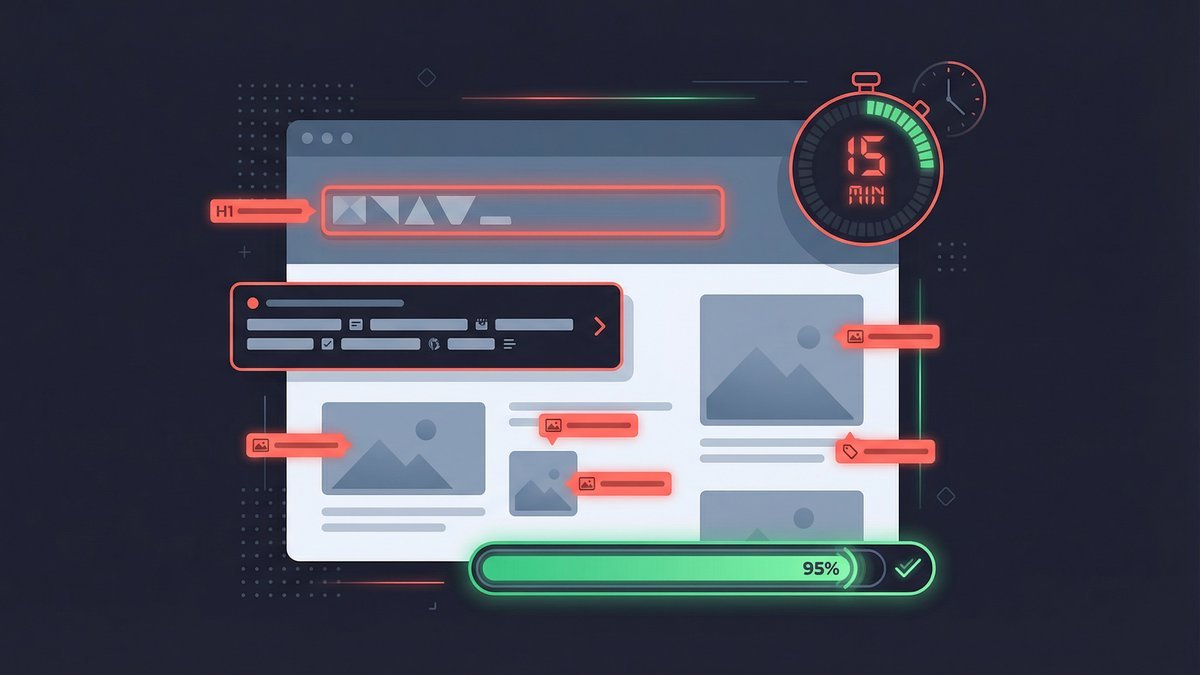
This guide presents a practical, 15-minute checklist for on-page SEO optimization. By focusing on key elements like titles, headers, meta descriptions, images, internal links, schema, and content, you can significantly enhance your pages quickly and consistently.
Whether you manage a few pages or hundreds, this approach helps you maintain SEO best practices efficiently and effectively.
Optimize Titles and Meta Descriptions for On-Page SEO Optimization
Start your on-page SEO optimization by ensuring your page titles and meta descriptions are compelling and relevant. The title tag should include your primary keyword naturally and stay within 50-60 characters to avoid truncation in search results.
Meta descriptions, while not a direct ranking factor, influence click-through rates. Craft clear, engaging descriptions around 150-160 characters that summarize the page’s content and include the main keyword.
Use tools like the free SEO Analyzer from Web Generation to audit these elements quickly and identify improvements.
Use Headers and Structured Content to Enhance On-Page SEO Optimization
Headers, especially the H1 tag, play a critical role in SEO and user navigation. Your page should have a single H1 that clearly includes the primary keyword. This signals to search engines the main topic of the page.
Subsequent headers (H2, H3) organize content into digestible sections, improving readability and keyword relevance. Avoid keyword stuffing; instead, use related terms and synonyms naturally.
Well-structured content helps search engines understand your page better and boosts user engagement.
Optimize Images and Media for Faster Loading and SEO
Images often slow down pages if not optimized properly, which can hurt rankings and user experience. Compress images to reduce file size without losing quality and use modern formats like WebP.
Include descriptive, keyword-rich alt text for all images. This helps search engines index your visuals and improves accessibility.
Don’t forget to use relevant file names and consider lazy loading to improve page speed. These steps are crucial parts of on-page SEO optimization.
Implement Internal Linking and Schema Markup for SEO Gains
Internal linking connects related pages within your site, distributing link equity and helping search engines crawl your site more effectively. Include descriptive anchor text naturally and link to relevant pages to enhance user navigation and boost SEO.
Schema markup adds structured data to your pages, helping search engines understand content context and enabling rich results in search listings. Use schema for articles, products, FAQs, and more.
For a detailed list of SEO criteria including schema integration, check the 336 SEO criteria resource by Web Generation.
Create Quality Content That Supports On-Page SEO Optimization
Content remains king for SEO. Make sure your page content is unique, informative, and answers users’ questions effectively. Use your primary and secondary keywords naturally throughout the text.
Keep paragraphs concise and use bullet points or numbered lists to improve readability. Avoid duplicate content and regularly update pages to maintain relevance.
For further learning on creating SEO-friendly content, explore the Web Generation Academy courses.
Conclusion
Following this 15-minute on-page SEO optimization checklist ensures every page is set up for success. Regularly auditing and updating these elements keeps your site competitive and user-friendly.
To streamline your SEO efforts, consider using the free SEO Analyzer and explore professional SEO services from Web Generation. These tools and expert support can help you achieve sustainable growth and better rankings.
Frequently Asked Questions (FAQ)
What is on-page SEO optimization?
On-page SEO optimization involves adjusting individual web pages to rank higher and earn more relevant traffic in search engines. It includes optimizing elements like titles, headers, meta descriptions, images, internal links, schema markup, and content quality.
How long does it take to optimize a page for SEO?
With a focused checklist, on-page SEO optimization can be done efficiently in about 15 minutes per page. This includes reviewing and updating titles, meta tags, headers, images, links, schema, and content structure.
Why is internal linking important for SEO?
Internal linking helps distribute page authority throughout your website, improves site navigation for users, and makes it easier for search engines to crawl and index your pages. It also helps establish topical relevance.
How does schema markup impact SEO?
Schema markup provides structured data that helps search engines understand your content better, which can lead to rich snippets in search results. This enhances your visibility and can increase click-through rates.
Can I optimize images without losing quality?
Yes, by compressing images using modern tools and formats like WebP, you can reduce file sizes significantly while maintaining visual quality. Adding descriptive alt text also improves SEO and accessibility.