
Advertising budgets need to prove their worth, and ROAS return on ad spend is the key metric to measure this. Whether you’re running campaigns in Tunisia, France, or Saudi Arabia, understanding ROAS allows you to track exactly how much revenue your ads generate compared to what you invest.
This article breaks down how to calculate your ROAS accurately and shares actionable tips to optimize it—from smart bidding to improving landing page quality and refining attribution models. These insights will help you boost your ad performance across multiple markets.
Understanding ROAS Return on Ad Spend
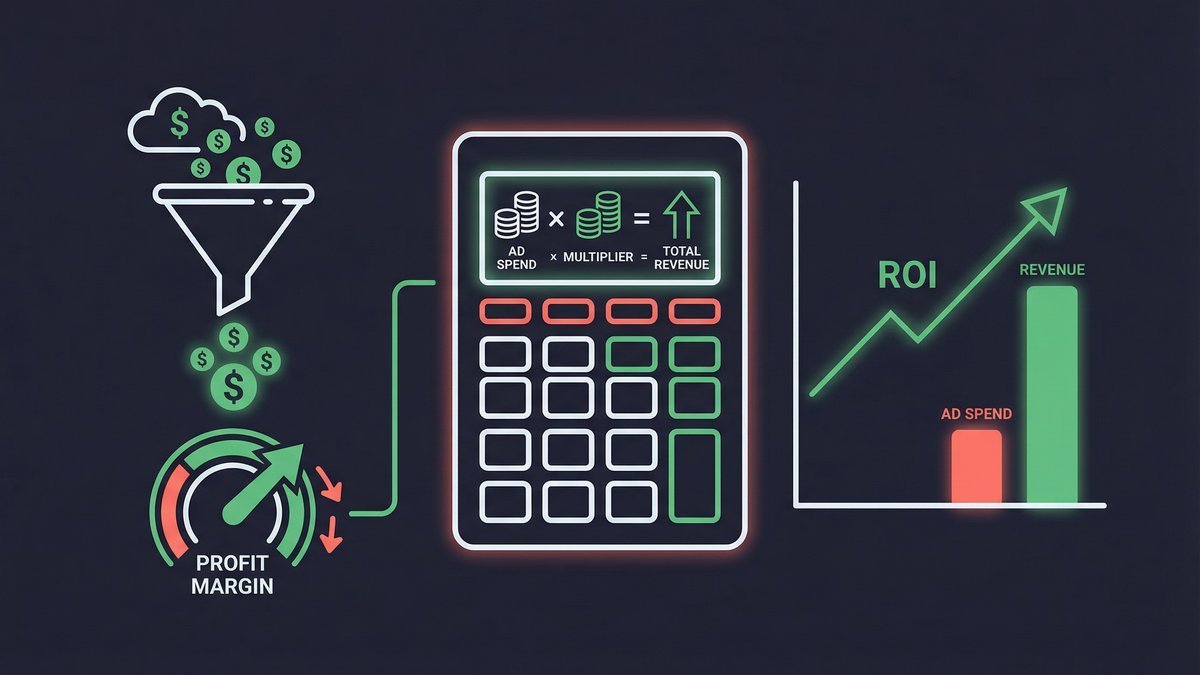
ROAS, or Return on Ad Spend, measures the revenue generated for every dollar spent on advertising. It’s a straightforward ratio: total revenue divided by total ad spend. For example, a ROAS of 5 means that for every $1 spent on ads, you earned $5 in revenue. This metric is crucial because it directly links marketing investment to business outcomes.
Unlike general ROI, ROAS focuses solely on advertising efficiency, helping advertisers quickly identify which campaigns or channels are profitable. Knowing your ROAS enables better budget allocation and campaign optimization across markets like Canada, Belgium, or the UAE.
How to Calculate ROAS Return on Ad Spend Accurately
Calculating ROAS requires two key data points: total revenue generated from ads and total ad spend. The formula is simple: ROAS = Revenue from Ads ÷ Cost of Ads. However, accurate tracking is essential. Use reliable analytics tools and ensure conversion tracking is correctly set up on your website or app.
For example, if your campaign generated $10,000 in sales and you spent $2,000 on ads, your ROAS is 5. Consider currency differences and timeframes when comparing ROAS across regions like Switzerland or Saudi Arabia. Also, exclude unrelated revenue to avoid skewed results.
Optimizing ROAS With Smart Bidding Strategies
Improving ROAS starts with bidding smartly. Automated bidding tools use machine learning to adjust bids based on conversion likelihood, maximizing your return. Platforms like Google Ads offer Target ROAS bidding, which automatically sets bids to achieve a specified ROAS goal.
Manual bidding can work too if you constantly monitor campaign data and adjust for high-performing keywords or audiences. Experiment with bid adjustments by device, location, or time of day, especially when targeting diverse markets including Tunisia and the UAE. This focused approach helps stretch your ad budget further without sacrificing results.
The Role of Landing Page Quality in ROAS Return on Ad Spend
Your landing page plays a pivotal role in converting clicks into sales, directly impacting ROAS. A fast-loading, relevant, and user-friendly landing page keeps visitors engaged and encourages conversions. Poor landing pages cause high bounce rates and wasted ad spend.
Make sure your landing page content aligns with the ad message, includes clear calls to action, and is optimized for mobile devices—a must in markets like France and Canada. Regularly test different layouts and content to find what drives the highest conversion rate. A quality landing page enhances ad relevance and quality score, which can also lower your bid costs.
Using Attribution Models to Better Understand ROAS
Attribution models determine how credit for conversions is assigned to different touchpoints in the customer journey. Choosing the right model helps you understand which ads truly contribute to your ROAS. Common models include last-click, first-click, linear, and data-driven attribution.
For example, a last-click model might undervalue upper-funnel ads that create awareness. Data-driven models, available in Google Ads, use actual conversion data to assign credit more accurately. This insight allows advertisers in Switzerland, Belgium, and Saudi Arabia to optimize their campaigns by investing in the most impactful channels and tactics.
Continuous Monitoring and Tools for ROAS Optimization
Optimizing ROAS isn’t a one-time task. Continuous monitoring is essential to adapt to market changes, competitor moves, and consumer behavior shifts. Use analytics dashboards and reporting tools to track ROAS regularly and identify trends or issues early.
Tools like the free SEO Analyzer and Ads Optimizers from Web Generation provide actionable insights to improve both organic and paid performance. Combining these tools with your campaign data ensures you can make informed decisions and maximize your advertising ROI.
Conclusion
Mastering ROAS return on ad spend is fundamental to running profitable ad campaigns across diverse markets like Tunisia, France, and Saudi Arabia. By accurately calculating ROAS, refining bidding strategies, improving landing pages, and leveraging proper attribution models, you can significantly enhance your advertising effectiveness.
For hands-on support and tools, explore Web Generation’s Google Ads services and Ads Optimizers. These resources will help you implement strategies that boost your ROAS and grow your business sustainably.
Frequently Asked Questions (FAQ)
What is a good ROAS for advertising campaigns?
A good ROAS varies by industry and business goals, but generally, a ROAS of 4 or higher (meaning $4 revenue for every $1 spent) is considered healthy. Lower ROAS might still be acceptable for brand awareness campaigns, while ecommerce often targets higher ROAS to ensure profitability.
How does ROAS differ from ROI?
ROAS focuses specifically on the return on advertising spend, measuring revenue generated per dollar spent on ads. ROI considers all costs and profits related to a campaign or business activity, including operational expenses, giving a broader profitability picture.
Why is landing page quality important for ROAS?
Landing page quality affects conversion rates directly. A well-designed, fast, and relevant landing page improves user experience, reduces bounce rates, and increases conversions, which in turn raises ROAS by generating more revenue from the same ad spend.
Can automated bidding improve ROAS?
Yes, automated bidding strategies like Target ROAS in Google Ads use machine learning to optimize bids in real-time, focusing spend where it’s most likely to generate profitable conversions, thus improving ROAS efficiently.
How do attribution models impact ROAS calculation?
Attribution models determine how conversion credit is assigned across touchpoints. Using an appropriate model ensures that you correctly assess which ads contribute to revenue, enabling more accurate ROAS calculations and better budget allocation.